
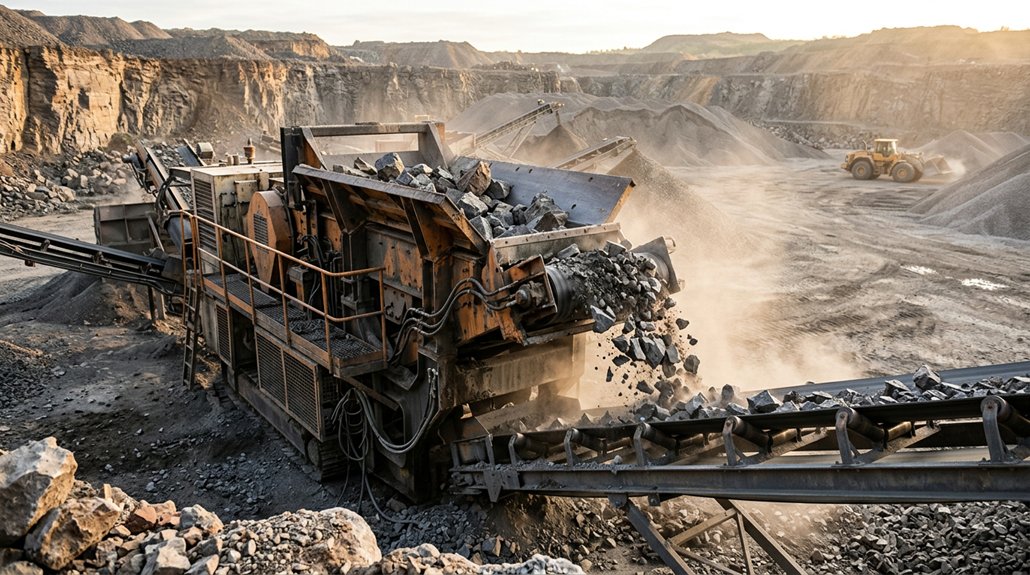
Like a well-tuned assembly line, a rock crushing plant turns blasted stone into consistent aggregate through carefully coordinated steps. When you choose suitable rock crushing machines, screens, and settings, you can improve throughput, limit rehandling, and maintain product quality. But even the right equipment can underperform if material flow, maintenance, or safety controls fall short. A few practical decisions can make the difference.
How Rock Crushing Machines Streamline Aggregate Production
By reducing blasted rock into consistent, specified sizes in a controlled sequence, rock crushing machines help you move aggregate from raw material to finished product efficiently. A coordinated operation can feed, crush, screen, and recirculate material with fewer handling delays.
You’ll maintain steady throughput by monitoring belt flow, crusher load, and screen performance, then correcting bottlenecks before they disrupt production. Material testing verifies gradation and product quality, helping you meet project specifications and limit off-spec stockpiles.
Automated controls and routine inspections support reliable operation, while guards, lockout procedures, and clear work zones protect your crew during service. Dust suppression and efficient equipment use can reduce environmental impact and unnecessary fuel consumption.
With accurate process monitoring, you can improve consistency, minimize downtime, and make better use of each load of blasted rock.
Choose a Crusher for Your Material and Output
Choosing the right crusher starts with matching its crushing action to your rock’s hardness, abrasiveness, and moisture, as well as the feed size and target product gradation.
Jaw crushers handle tough, coarse feed and offer straightforward operation. Impact crushers can shape softer, less abrasive rock efficiently, while cone crushers suit hard, abrasive material when you need consistent, smaller output.
Consider Material durability: highly abrasive stone can accelerate wear, so factor in liners, maintenance access, and replacement costs.
Check crusher capacity against your required throughput, but don’t rely on nameplate ratings alone; actual performance depends on feed conditions and product specifications.
Confirm the machine accepts your maximum feed size and delivers the gradation you need.
Before operation, verify guards, emergency stops, and lockout procedures, and keep personnel clear of moving equipment.
Match Primary and Secondary Crushing Stages
A well-matched primary and secondary crusher train reduces oversize efficiently while limiting unnecessary recirculation and wear. During primary crushing, choose a machine that accepts your feed’s maximum size and handles its hardness without overloading.
Then match secondary crushing equipment to the primary’s discharge and your required reduction ratio. Check each crusher’s capacity, feed opening, and operating range; a bottleneck in either stage can restrict the entire circuit.
Coordinate settings so the secondary unit receives a steady, suitable feed rather than intermittent surges. Monitor power draw, bearing temperature, and wear patterns to catch developing problems early.
Before adjustments or clearing blockages, follow lockout procedures and verify stored energy is released. A balanced train helps you maintain throughput, protect equipment, and reduce avoidable downtime without compromising safe operation.
Set Up Screens for Consistent Aggregate Sizes
Once crushed material reaches the screens, correct setup helps you produce consistent aggregate sizes and limit recirculation. Choose mesh sizing to match each product specification, accounting for particle shape, moisture, and expected throughput. If openings are too small, you’ll risk blinding and reduced capacity; oversized openings can let out-of-spec material pass through.
Complete screen calibration by checking deck angle, stroke, and vibration frequency against the equipment manufacturer’s guidance. Inspect panels for wear, secure all fasteners, and replace damaged sections before operation.
Keep guards in place, isolate power, and follow lockout procedures before adjustments or maintenance.
During production, sample each discharge stream and compare gradation with target limits. Adjust settings in measured steps, then retest. Consistent checks help you catch drift early, protect product quality, and avoid unnecessary reprocessing.
Keep Material Moving With Efficient Plant Layout
You can streamline material flow by positioning crushers, screens, and conveyors to create a direct path through the plant.
Keep transfer points close and accessible to reduce delays and simplify safe maintenance.
A well-planned layout helps you sustain throughput without creating congestion or unnecessary equipment movement.
Streamline Material Flow
When you plan an aggregate plant, arrange crushers, screens, and conveyors to keep material moving along a direct, balanced path. Match each machine’s capacity to the next stage so you don’t create bottlenecks or overload equipment.
Position stockpiles and feed points to support steady, controlled delivery while preserving clear access for inspections and maintenance.
Consider Material sourcing when choosing the plant location; shorter haul routes can reduce fuel use and environmental impact.
Use a layout that separates pedestrian routes from mobile equipment, provides safe operator visibility, and leaves room for emergency access.
Coordinate conveyor routes with terrain and drainage, and protect transfer areas from spillage.
Review the full process flow before installation, then adjust operating rates to maintain consistent feed and product quality without compromising safety or equipment performance.
Minimize Transfer Delays
To minimize transfer delays, position crushers, screens, hoppers, and conveyors so material moves directly between stages with as few handoffs as possible. Align discharge points with receiving equipment, and size belts for peak throughput to prevent bottlenecks. Keep routes clear for inspection and maintenance; never bypass guards or create unsafe access to save time.
| Layout choice | Operational benefit |
|---|---|
| Short conveyor runs | Reduce transfer time and spillage |
| Buffer hoppers | Stabilize feed during brief interruptions |
Plan Material storage near the process stage it supports, while preserving safe separation from moving equipment. Coordinate Transportation logistics with production rates, truck access, and stockpile locations so deliveries don’t block plant traffic. Use level, well-drained transfer areas and accessible shutdown controls. Review flow during operation: if queues form, adjust feed rates or equipment placement before delays spread through the circuit. A practical layout keeps aggregate moving without compromising worker safety.
Improve Production With the Right Crusher Settings
Correct crusher settings help you produce consistent aggregate while minimizing wear, energy use, and unplanned downtime. Begin with crusher calibration: verify the closed-side setting against your target product size, then adjust it according to the material’s hardness, moisture, and gradation.
A tighter setting can increase fines and power demand, while a wider setting may reduce throughput or leave oversized pieces. Monitor feed rate and keep material flowing evenly; surges can overload the chamber, and starvation wastes capacity.
Use manufacturer limits for speed, pressure, and operating load, and make adjustments gradually while tracking output size and motor current. Before changing settings, follow lockout procedures and keep personnel clear of moving equipment.
Record results so you can repeat productive configurations across shifts and changing feed conditions without compromising safe, efficient operation.
Reduce Downtime With Routine Crusher Maintenance
To reduce unplanned downtime, inspect wear components regularly and replace them before damage spreads.
Lubricate moving parts to limit friction, following the manufacturer’s procedures and lockout requirements.
Schedule preventive service around production demands to keep your crusher operating safely and efficiently.
Inspect Wear Components
Because worn liners, jaw plates, and blow bars can reduce crushing efficiency and damage other components, inspect them at scheduled intervals. Before wear component inspection, shut down and isolate the crusher, then follow lockout procedures and verify zero energy. Use the manufacturer’s limits to decide when parts need replacement.
| Component | Check for |
|---|---|
| Liners | Thin spots, cracks, loose fasteners |
| Jaw plates | Uneven wear, chips, secure seating |
| Blow bars | Cracks, edge loss, proper fit |
Record measurements and findings each time; consistent tracking helps you identify wear trends and plan service before a failure stops production. Replace components as a matched set when specifications require it, and use approved lifting points and tools. Don’t reach into the chamber or inspect moving equipment. Timely checks protect crusher part longevity, maintain product consistency, and help you schedule repairs during planned downtime.
Lubricate Moving Parts
Lubricate crusher bearings, shafts, and other specified moving parts at the intervals and with the lubricant grades listed in the manufacturer’s manual. Proper lubrication reduces friction, limits heat buildup, and helps protect components from premature wear.
Before applying grease or oil, follow lockout procedures and confirm the equipment is safe to access. Clean fittings first so you don’t introduce grit into the lubrication system.
Use the specified amount; overgreasing can damage seals or raise bearing temperatures, while too little leaves surfaces unprotected. Check for leaks, contamination, or unusual lubricant discoloration, and address problems before they affect production.
These lubrication essentials support reliable operation and help you avoid preventable stoppages. Consistent moving part maintenance also keeps crushing performance steady, protects your investment, and helps your crew work safely and efficiently.
Schedule Preventive Service
Schedule preventive service at intervals based on the manufacturer’s recommendations, operating hours, and site conditions. Plan inspections around production demands, and reserve time for tasks such as checking liners, belts, bearings, guards, and hydraulic systems. Before work begins, isolate and lock out equipment, verify zero energy, and follow site safety procedures.
Track vibration, temperature, oil condition, and wear trends to spot developing faults before they cause breakdowns. Predictive analytics can help you prioritize repairs and refine service intervals using actual machine data.
Keep inspection records current so your crew can compare readings and identify changes.
Use supplier coordination to secure qualified technicians, replacement parts, and consumables ahead of scheduled shutdowns. Confirm parts compatibility and delivery dates before taking a crusher offline.
After service, test safety devices, inspect the work area, and return the machine to production only when it’s safe.
Control Dust, Noise, and Safety Risks
When rock crushing machines process aggregate, they can release respirable silica dust, generate hazardous noise, and expose workers to moving parts and flying debris. You can limit exposure with engineered dust suppression, such as water sprays at transfer points and enclosed, ventilated operator stations. Maintain these controls and inspect them routinely; dry sweeping can put settled silica back into the air.
For noise reduction, keep equipment maintained, use barriers where practical, and provide suitable hearing protection. You should also guard conveyors and crushers, establish exclusion zones, and use lockout/tagout before clearing jams or servicing equipment.
Train operators to recognize hazards, follow safe operating procedures, and report damaged guards or failed controls promptly. When you integrate these measures into daily production, you protect your crew while supporting reliable, efficient aggregate processing.
Frequently Asked Questions
What Permits Are Required to Operate an Aggregate Crushing Plant?
You’ll typically need air-quality permits for crushers, screens, generators, and dust-control systems, plus stormwater and wastewater approvals, land-use or zoning authorization, and building or electrical permits.
Requirements vary by jurisdiction, plant capacity, fuel use, and whether operations are temporary or permanent.
Submit a complete Permit application with equipment specifications, emissions estimates, site plans, and control measures.
Confirm local rules before mobilizing, and maintain Equipment safety, inspection, and environmental records throughout operations to avoid costly delays.
How Are Aggregate Products Tested for Quality and Compliance?
You test aggregate products with a battery of checks so demanding it could expose a single rogue grain. Quality control starts with representative sampling, then material testing measures gradation, particle shape, abrasion resistance, soundness, and contaminants.
You compare results with project specifications and applicable standards, documenting each test for traceability. Keep sampling areas safe, use calibrated equipment, and isolate failing lots promptly.
This disciplined process helps you meet compliance requirements while reducing rework, delays, and costly surprises.
What Factors Influence the Cost of Producing Crushed Aggregate?
Your crushed aggregate costs depend on feedstock price, haul distance, labor, energy, maintenance, and required product specifications.
Equipment efficiency strongly affects throughput, fuel use, and downtime, while wear-part life and plant utilization shape operating expenses.
You’ll also face cost variability from changing rock hardness, moisture, market demand, and regulatory requirements.
Budget for dust control, guarding, inspections, and trained operators; these safety measures protect crews and help prevent costly interruptions across your production cycle.
Can Recycled Concrete and Asphalt Be Used as Aggregate Feedstock?
Yes—you can use recycled concrete and asphalt as aggregate feedstock; they can turn yesterday’s pavement into tomorrow’s foundation.
Recycling benefits include reduced demand for virgin stone, less landfill waste, and potentially lower hauling costs.
Their material versatility suits road base, fill, and some new concrete or asphalt mixes, depending on specifications.
You’ll need to sort, crush, screen, and test feedstock for contaminants, gradation, and performance, while controlling dust and guarding equipment.
What Environmental Regulations Apply to Aggregate Production Sites?
You’ll typically need permits covering air emissions, stormwater discharges, wastewater, wetlands, and land disturbance. Environmental impact reviews may apply, depending on your location, project size, and nearby resources.
You must also follow noise limits, dust-control requirements, waste rules, and worker-safety standards. Check federal, state, and local requirements before construction; regulators may require monitoring, records, and site restoration.
Strong regulatory compliance planning helps you avoid delays, protect workers and neighbors, and operate efficiently.
Leave a Reply