

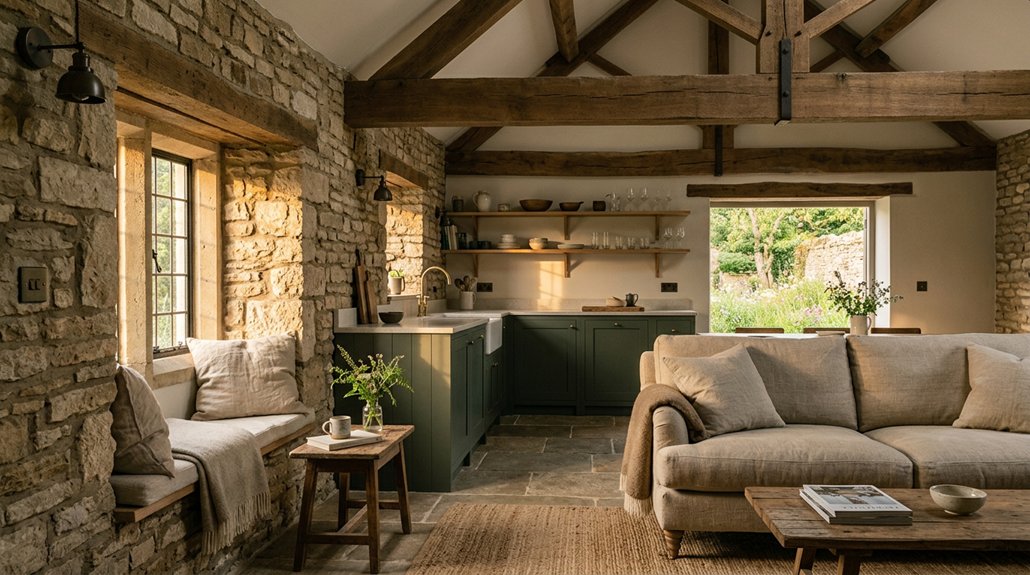
A cottage renovation can feel like tuning an old instrument: one poorly placed upgrade may throw off the whole composition. You’ll need to protect features such as exposed beams and stone walls while improving insulation, heating, ventilation, and services. Start by checking planning restrictions and evaluating the building’s condition before choosing materials or layouts. The key decisions often emerge where modern systems meet historic fabric—and that’s where careful planning matters most.
Set Your Cottage Renovation Priorities
Before choosing finishes or adding modern amenities, set clear priorities for your cottage renovation. Inspect each room and record defects, dimensions, and daily-use problems. Rank needs by safety, weather protection, comfort, and cost; address damp, roof leaks, unsafe wiring, and poor insulation before cosmetic updates.
Separate essential work from optional improvements, then assign a realistic budget and contingency for hidden repairs. Decide which original features you’ll retain, such as exposed beams, stonework, or timber floors, and note where careful repairs can preserve them.
Map practical upgrades around your routines: storage, lighting, heating, and kitchen access. Consider how views and routes connect the cottage garden to indoor spaces.
Choose interior decor only after you’ve settled the layout, materials, and maintenance requirements. A written scope helps you compare quotes and control changes.
Check Planning Rules and Heritage Restrictions
Check planning rules and heritage restrictions before finalizing your cottage’s design or hiring contractors. Contact your local planning authority to confirm whether the property sits in a conservation area, has listed status, or falls under other protected designations. These classifications can limit changes to windows, roofs, extensions, boundaries, and exterior materials.
Ask which applications you’ll need, such as planning permission, listed building consent, or building regulation approval, and whether separate approvals apply.
Build legal compliance into your schedule and budget; don’t assume routine repairs qualify for exemptions. Confirm documentation requirements early, including measured drawings, photographs, heritage statements, specifications, and contractor details.
Keep written decisions, approved plans, and correspondence together, and make sure your team works from the authorized versions. If requirements seem unclear, request written guidance before ordering materials or starting work.
Repair Stonework, Beams, and Original Details
Repair original stonework, beams, and architectural details with methods suited to their materials and condition. Before work begins, photograph each area and record cracks, movement, moisture, and previous repairs.
For stone repair, remove loose mortar by hand, then repoint with a compatible lime-based mix. Hard cement can trap moisture and damage softer masonry. Match aggregate, joint profile, and finish to the existing work, and replace stones only when they’re beyond repair.
Inspect exposed timber for insect activity, fungal decay, and structural weakness. Beam restoration may involve cleaning, localized timber splicing, or discreet reinforcement designed by a qualified professional.
Don’t conceal damaged sections or cut original beams for new services. Salvage and refit sound boards, ironwork, and mouldings where possible.
Keep a record of materials and repairs so future maintenance preserves the cottage’s character.
Improve Insulation Without Losing Cottage Character
You can insulate cottage walls from within to improve thermal performance without changing the exterior.
Protect original beams, stonework, and trim by detailing insulation around them rather than covering them.
Choose breathable materials that manage moisture and reduce the risk of damp in solid walls.
Insulate From Within
Insulating a cottage from within can improve comfort and reduce heat loss while preserving its exterior and historic character. Start by drafting plans that identify cold walls, moisture paths, and ventilation needs. When choosing materials, match insulation to the wall’s construction; breathable options can help limit trapped damp in solid masonry. Fit insulation continuously, seal gaps carefully, and detail junctions around floors, ceilings, and openings to reduce thermal bridges. Ask a qualified professional to assess condensation risk before work begins.
| Detail | Comfort you’ll notice |
|---|---|
| Wall insulation | Warmer rooms |
| Sealed gaps | Fewer chilly drafts |
| Moisture checks | Drier walls |
| Careful detailing | Steadier temperatures |
Check indoor humidity after installation, and maintain appropriate ventilation. If walls feel damp or insulation becomes wet, pause and investigate rather than covering the problem.
Preserve Original Details
Before adding insulation, identify original features such as deep window reveals, timber panelling, shutters, and decorative mouldings. Photograph and measure each detail, noting how it meets floors, ceilings, and window frames. This record helps you plan insulation thickness without concealing profiles or disrupting proportions.
Where you need to adjust a reveal, retain its original depth and reproduce the trim with matching dimensions. Remove panelling carefully, label each board, and refit it over the finished wall. Keep shutters operable, and check that added linings won’t obstruct hinges, catches, or window openings.
Consult a conservation specialist before altering rare or fragile elements. Skilled Traditional craftsmanship can repair damaged sections with compatible joinery and finishes. By retaining original materials and proportions, you’ll protect Architectural authenticity while improving comfort.
Inspect junctions after installation to confirm details remain aligned and functional.
Choose Breathable Materials
Choose insulation and finishes that let water vapour pass through traditional walls, such as wood-fibre boards, lime-based materials, or sheep’s wool. These natural insulation options help reduce heat loss while allowing moisture to migrate and dry, lowering the risk of trapped damp and decay.
Before you install them, check the wall’s construction, exposure, and existing moisture; repair leaks and rising damp first.
Fit insulation carefully around joists and openings, but don’t block ventilation paths or cover sound historic timber.
Use lime plaster or breathable paint rather than impermeable cement render or vinyl coatings, which can trap moisture.
For interiors, choose breathable fabrics for curtains and furnishings to support airflow and preserve a soft, cottage-appropriate finish.
Ask a conservation professional to assess unusual walls and specify compatible materials before work begins.
Choose Windows and Doors That Suit the Cottage
Choose window and door styles that match your cottage’s proportions, materials, and period details. You can preserve its character while improving comfort and efficiency with well-fitted units, low-emissivity glazing, and effective weather seals.
Check that each opening suits the wall construction and meets ventilation and escape requirements.
Match the Cottage’s Character
Windows and doors should suit the cottage’s age, proportions, and materials while meeting modern needs for insulation, security, and weather resistance. Examine original openings before choosing replacements; their dimensions, spacing, and alignment often define the façade. Match frame profiles, glazing bars, and finishes to surviving timberwork or stone detailing.
Decorative features, such as traditional latches, hinges, and panel patterns, can preserve character without compromising dependable operation. For a listed cottage, check planning requirements and consult the conservation officer before altering openings or materials.
Consider Landscape integration, too: select colours and sightlines that relate to nearby stone walls, planting, and rural views. Where original windows remain sound, repair them rather than replace them. You’ll retain authentic details and avoid unnecessary changes to the cottage’s established appearance.
Don’t add styles that conflict with its period.
Improve Comfort and Efficiency
To improve comfort and efficiency, assess how each window and door performs before replacing it. Check for drafts, condensation, sticking frames, and damaged seals; these signs reveal where heat escapes or moisture enters. Repair sound timber and retain original glass when practical, since historic details help preserve the cottage’s character.
Where replacement is necessary, choose units sized to existing openings and suited to the building’s exposure. Low-emissivity double glazing can reduce heat loss, but confirm that added weight and thickness won’t damage old frames or alter the façade. Fit weatherstripping and use compatible sealants to limit air leakage without trapping moisture.
Select insulated doors with secure, well-sealed thresholds. Pair upgrades with controlled ventilation, Smart lighting, and Energy efficient appliances to reduce demand.
Check local conservation requirements before ordering, and have a qualified installer verify measurements, drainage, and airtightness.
Update Kitchens and Bathrooms With Care
When updating a rural cottage’s kitchen or bathroom, preserve features that still work and plan around the building’s existing plumbing, wiring, and ventilation. Before removing cabinets, sinks, or partitions, check their condition and identify hidden pipes and cables. Keep sound floorboards, stonework, and original joinery; repair them with compatible materials rather than replacing them unnecessarily.
You can improve storage with fitted cabinets sized to uneven walls, while leaving access panels for valves and traps. Choose moisture-resistant finishes and seal junctions carefully, especially around baths, showers, and worktops. Vintage lighting can suit the cottage’s character, but have an electrician assess wiring and specify appropriate bathroom-rated fittings.
Retain antique fixtures when they function safely; otherwise, use faithful replacements with modern seals and connections. Confirm drainage falls and ventilation capacity before finalizing layouts, so new fixtures work reliably without damaging historic fabric or trapping moisture.
Add Reliable Heating and Modern Services
Before installing new heating or services, assess the cottage’s insulation, existing pipe routes, electrical capacity, and ventilation. Match equipment to the building’s heat loss, and preserve historic fabric when routing cables or pipes. You’ll avoid damp by maintaining airflow and insulating vulnerable pipework.
| System | Practical check | Benefit |
|---|---|---|
| Heat pump | Confirm emitter capacity | Efficient, steady warmth |
| Boiler | Check flue and controls | Reliable hot water |
| Smart thermostats | Zone occupied rooms | Precise temperature control |
Ask a qualified installer to test circuits, pressure, and ventilation before commissioning. Renewable energy, such as solar panels, can support heating or hot water when the roof and electrical system suit. Keep service access clear, label shutoffs, and document concealed routes. Choose controls you can operate easily, then test the system through a full heating cycle before relying on it in cold weather. This helps you spot faults early.
Plan a Realistic Cottage Renovation Budget
A realistic cottage renovation budget starts with a room-by-room scope and current local quotes for labor and materials. Record each task, quantity, specification, and expected price, separating essential repairs from optional upgrades. Cost estimation should include surveys, permits, delivery, waste removal, and taxes, not just visible construction work.
Check the condition of roofs, foundations, windows, and services before setting allowances; hidden defects can change totals quickly.
Use Budget allocation to assign funds by priority: protect the structure first, then address comfort and finishes. Keep heritage repairs distinct from modern additions so you can track trade-offs.
Add a contingency of 15–20 percent for concealed damage and price changes, and don’t spend it on planned extras.
Compare estimates against your available cash flow, schedule purchases by phase, and review actual costs monthly. Update the forecast whenever scope or prices change.
Find Craftspeople Experienced With Old Cottages
Choose craftspeople who’ve worked on cottages of a similar age and construction, since traditional stone, lime mortar, timber frames, and breathable finishes need different methods from modern materials.
Ask for references and inspect completed projects, especially repairs to masonry joints, roof structures, windows, and damp areas.
Confirm that each contractor understands how unsuitable cement, impermeable coatings, or trapped moisture can damage historic fabric.
Request a written scope that identifies materials, preparation methods, sequencing, and protection of original features.
Check insurance, relevant qualifications, availability, and who’ll supervise the work on site.
For Heritage restoration, consult a conservation officer when permissions or protected features may apply.
Compare detailed quotes, not just totals, and clarify how variations will be approved.
Skilled Traditional craftsmanship can preserve character while making your cottage comfortable, durable, and easier to maintain.
Frequently Asked Questions
How Can I Make a Small Cottage Feel More Spacious?
Make your small cottage feel more spacious by improving sightlines, reducing visual clutter, and using every inch efficiently. An Open plan layout can connect living, dining, and kitchen areas; preserve structural supports and define zones with rugs or lighting.
Add Vertical storage, such as tall shelves and wall-mounted cabinets, to free floor space. Choose furniture with exposed legs, use mirrors opposite windows, and keep window treatments light so daylight reaches deeper into each room.
What Flooring Works Best in a Renovated Rural Cottage?
Your cottage’s floor is its foundation, so choose a surface that suits its age, moisture levels, and daily use.
Wooden planks preserve rural character; use reclaimed boards or engineered timber over a stable subfloor, and seal them against spills.
Natural linoleum offers a resilient, low-maintenance alternative for kitchens and entryways.
Check subfloor ventilation and insulation first, since damp can damage either material.
Match finishes to adjoining rooms for a cohesive, spacious feel.
How Can I Improve Cottage Lighting While Preserving Its Atmosphere?
You can improve cottage lighting by layering period appropriate fixtures with discreet modern sources. Choose warm, dimmable LEDs, around 2700K, to flatter timber, stone, and plaster.
Use ambient lighting techniques such as shaded wall sconces, table lamps, and concealed uplights to soften dark corners without flattening texture.
Add task lights near work surfaces, and aim beams away from exposed rafters.
Keep wiring unobtrusive, and install separate dimmer controls so you can adjust each layer.
Which Smart-Home Features Are Useful in a Rural Cottage?
Start with smart security and energy automation; the right setup can prevent a small problem from becoming a costly surprise. You can install door sensors, discreet cameras, and leak detectors, then receive alerts even when mobile coverage is weak.
Add a local hub that keeps essential routines running during internet outages.
Smart thermostats, radiator valves, and timed lighting help you reduce energy use while preserving the cottage’s character.
Choose compatible devices and test backup power before relying on them.
How Can I Make My Cottage Garden Complement Its Heritage Character?
You can complement your cottage’s heritage character by choosing Heritage plantings suited to local soil and climate, then arranging them in traditional garden layouts.
Use cottage-garden favorites such as roses, hollyhocks, foxgloves, and herbs, grouping plants in informal borders near stone walls or paths.
Preserve mature trees and original features, and use locally sourced stone, brick, or timber for edging.
Keep paths narrow and practical, and avoid overly formal paving or modern ornaments.
Leave a Reply